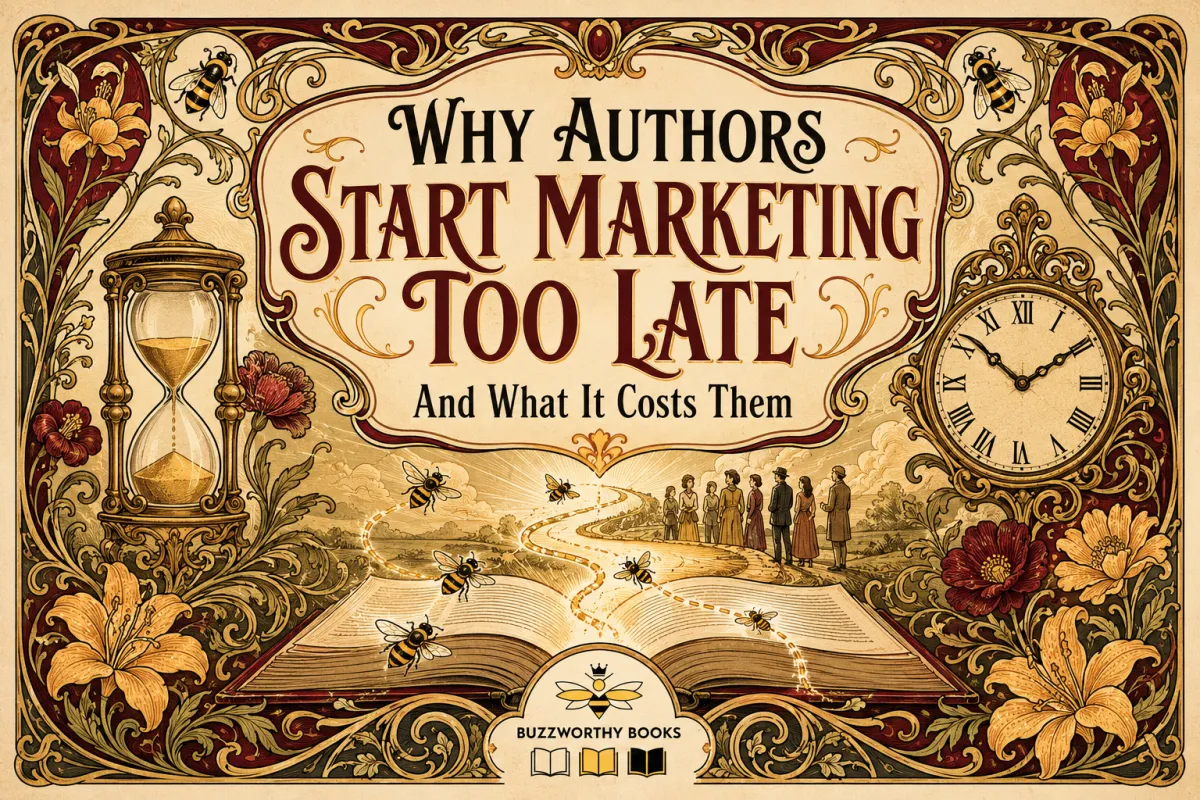
Why Authors Start Marketing Too Late—and What It Costs Them
An author finishes the manuscript, approves the cover, uploads the files, and finally turns to marketing.
Then comes the uncomfortable realization:
The book may be ready—but the audience is not.
This happens to smart, capable authors all the time. They have spent months or years creating something valuable. Yet when publication day arrives, they are trying to introduce themselves, explain the book, build trust, attract attention, secure reviews, and generate sales all at once.
That is too much work for one launch to carry.
The problem is not that authors are lazy, careless, or uninterested in reaching readers. The problem is that many authors misunderstand what book marketing actually is.
Authors Often Confuse Marketing With Promotion
Promotion says:
My book is available. Please buy it.
Marketing begins with different questions:
Who needs this book? Why will it matter to them? Where are they already looking for help? How can I begin to earn their trust?
Promotion is one part of marketing, but it usually happens near the point of sale. Marketing begins much earlier, sometimes while the book is still being written.
You do not have to sell an unfinished book. You can begin the conversation that fits where your book belongs.
Why Do Authors Wait So Long?
1. They believe the book must be finished first
Authors often feel they have nothing to market until they have a cover, publication date, or purchase link. But readers can become interested in the ideas, questions, stories, and problems behind a book long before they can buy it.
An author writing about caregiving, leadership, reinvention, grief, health, or entrepreneurship already has something meaningful to discuss. The manuscript does not need to be complete for the conversation to begin.
2. Writing feels safer than visibility
Writing is private. Marketing asks an author to be seen.
For many authors—especially thoughtful experts and introverts—visibility can feel like self-promotion. They may worry about being pushy, repetitive, or overly focused on sales.
Yet helpful marketing is not shouting, “Look at me.” It is saying, “I understand something you may be facing. Let’s talk about it.”
Marketing can be an act of service when it helps the right people recognize that a book is for them.
3. Production takes over
Editing, proofreading, cover design, formatting, distribution, metadata, and deadlines can consume every available hour. Marketing becomes the task authors promise to handle “when the book is done.”
But publication is not the end of the workload. It is the moment the book enters a crowded marketplace. If no audience has been cultivated, the author must start building one under pressure.
4. They underestimate how long trust takes
An email list cannot be built overnight. Neither can relationships with podcast hosts, event organizers, association leaders, bookstores, librarians, reviewers, or potential partners.
People may need to encounter an author several times before they subscribe, attend an event, recommend the book, or make a purchase. Trust grows through repeated, relevant contact.
That is not a flaw in the reader. It is how relationships work.
5. They expect the launch to create momentum
A launch can concentrate attention, but it cannot manufacture a community from thin air.
Friends and colleagues may create an early sales bump. A few social posts may generate congratulations. Then the activity fades because no system exists to continue the conversation.
A launch is most effective when it activates relationships that already exist.
What Starting Late Costs Authors
When marketing is delayed, the launch becomes compressed. Everything feels urgent, and the author has fewer choices.
Common consequences include:
Fewer advance readers and early reviews
A smaller group of people ready to buy
Rushed or generic messaging
Missed podcast, media, speaking, and partnership opportunities
Greater dependence on paid advertising or short-term promotions
A brief sales spike followed by silence
Author exhaustion and disappointment
The book itself may be excellent. The problem is that too few people were prepared to care when it arrived.
Starting late also affects learning. When authors talk with readers before publication, they discover which language resonates, which questions keep surfacing, and which parts of the book create the strongest response. Those insights can improve the book description, speaking topics, reader resources, emails, and even the manuscript itself.
Waiting removes that valuable feedback loop.
What Changes When Authors Start Earlier?
Early marketing does not require a daily posting marathon or a year-long sales campaign. It means building the path as the book takes shape.
An author can:
Clarify the audience and the book’s central promise
Talk about the problem the book addresses
Share stories and insights from the writing process
Invite potential readers to respond to questions
Grow an email list around a useful resource or shared interest
Develop relationships with podcast hosts, organizations, and communities
Recruit advance readers without a last-minute scramble
Test language before committing it to a book description or campaign
By publication day, the book is no longer arriving as a stranger. Readers already recognize the problem, the promise, and the person behind it.
When is the Best Time to Begin Book Marketing?
For nonfiction authors, marketing can begin as soon as three things are reasonably clear:
Who the book is for
What problem, desire, or change it addresses
Why the author’s perspective matters
These ideas may evolve. That is part of the value of beginning early. Marketing becomes a way to listen and refine—not merely a way to announce and sell.
Your Book is an Invitation
A book should not have to knock on a locked door and hope someone answers.
When authors build trust before publication, the door is already open. The book arrives as the next chapter in a conversation readers have chosen to join.
The goal is not to make launch day louder. It is to make the book’s life longer.
If your book is still in progress, ask yourself:
What conversation can I begin today that will help the right readers recognize this book when it arrives?
Your book does not need a bigger burst of noise. It needs a path to the people it was written to serve.
Your Next Step
If you are unsure whether your author platform, message, and marketing are ready to support your book, a Buzzworthy Book Audit can help you see what is working, where friction is slowing you down, and what to prioritize next.